 TallyKnot
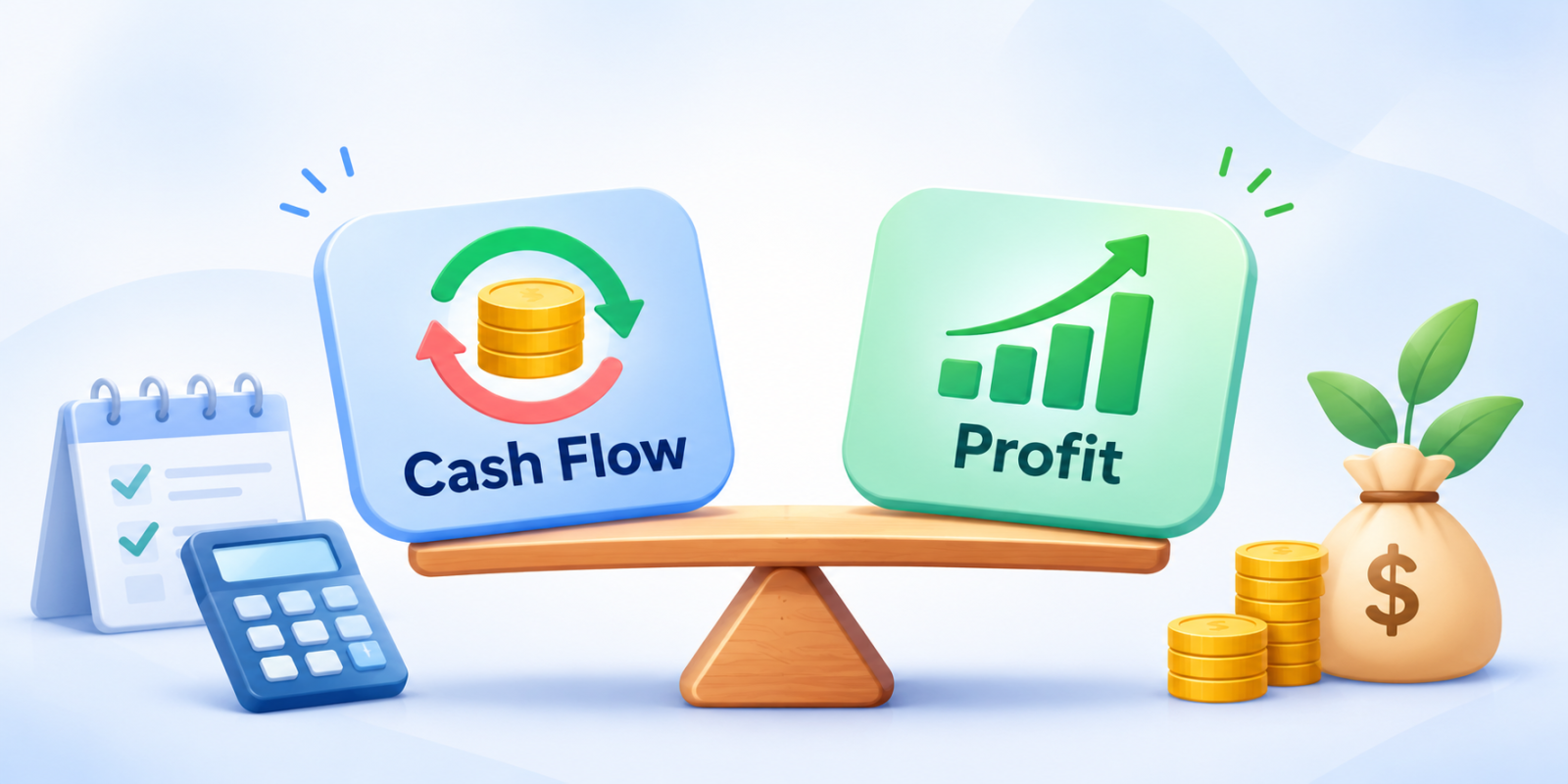
Here's a situation that catches a lot of people off guard. You finish the month, add everything up, and you made money. A decent amount, actually. Then rent is due, and there isn't enough in the bank to pay it.
How can you be making a profit and still be short on cash? The answer is that profit and cash flow are two different things. They measure different stuff, they move at different times, and it's entirely possible for one to look great while the other is quietly falling apart.
You don't need an accounting degree to get this. Once you see how the two work, you'll start noticing the gap between them everywhere, in your business and in your personal money too.
What is profit?
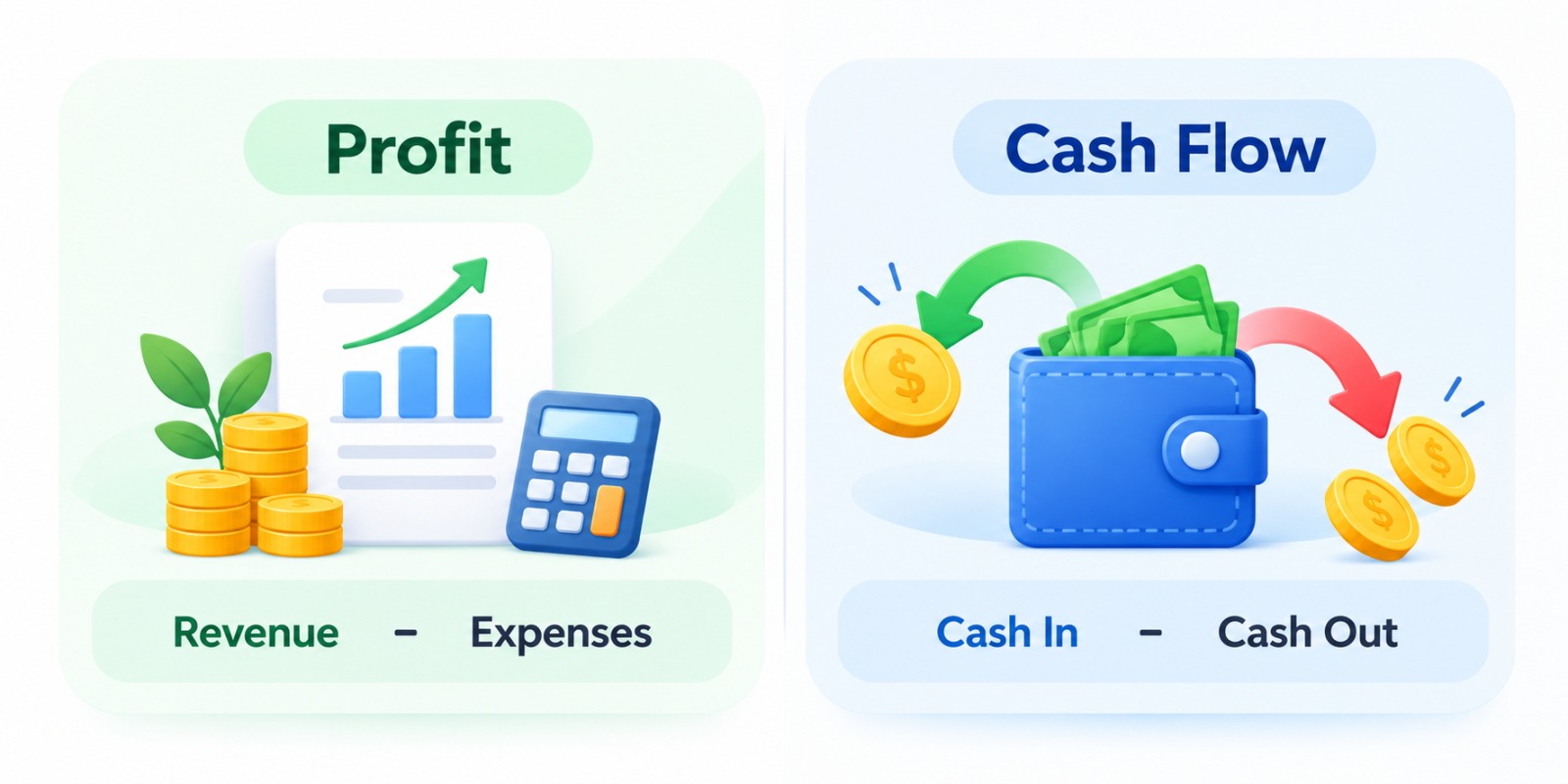
Profit is what's left after you take your costs away from what you earned. The basic formula is simple:
Profit = Revenue - Expenses
If you sold $10,000 worth of goods this month and it cost you $7,000 to make and sell them, your profit is $3,000. That number answers one question: is this business actually worth running?
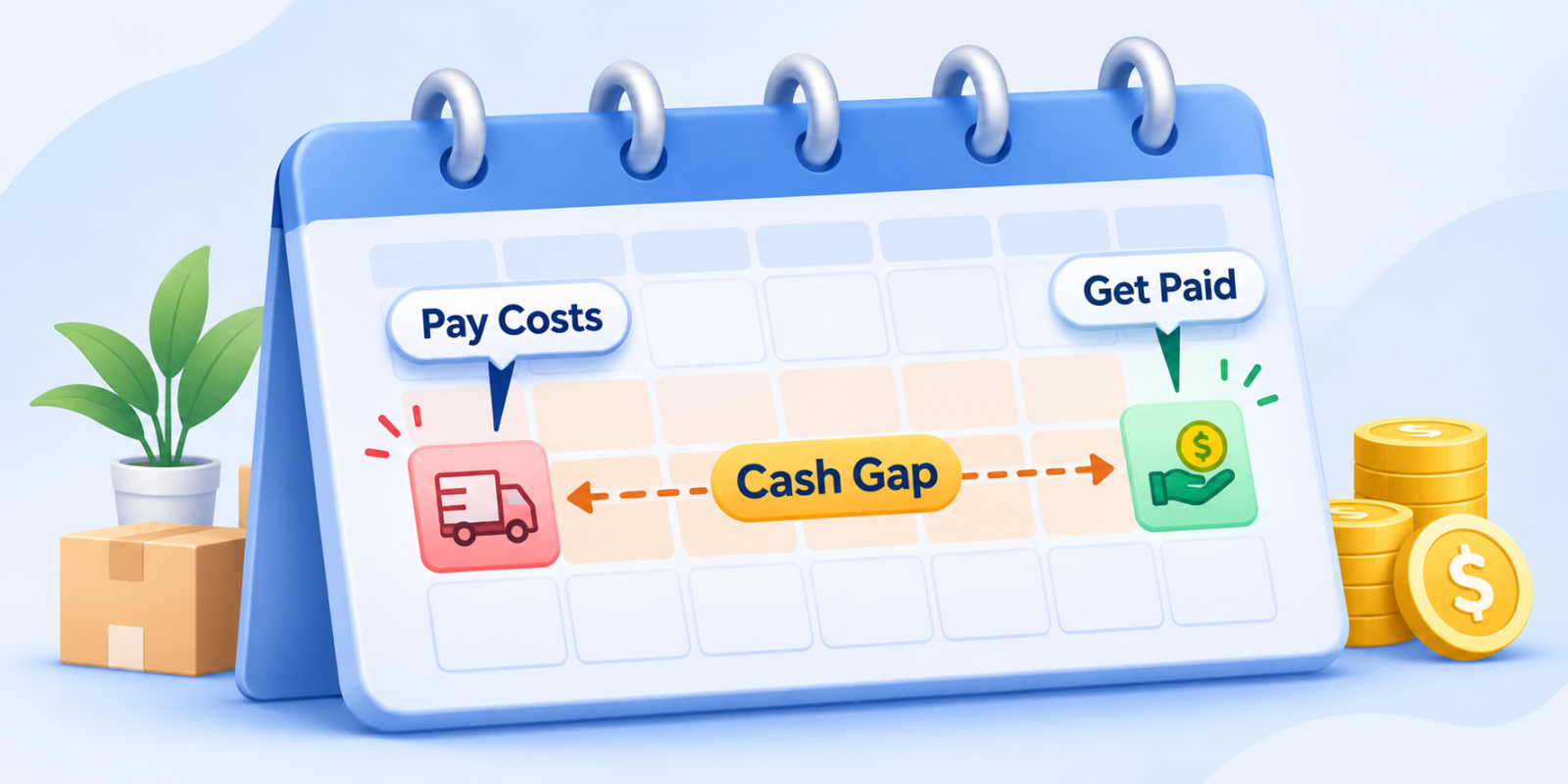
The catch is that profit is usually counted when a sale happens, not when the money lands in your account. If you finish a job today and send an invoice that gets paid next month, that sale still counts toward this month's profit. On paper, you earned it. In your wallet, you haven't seen a cent yet.
What is cash flow?
Cash flow is the actual money moving in and out of your account. Not what you're owed, not what you've promised to pay. Just what came in and what went out.
Cash flow = Cash coming in - Cash going out
When more cash comes in than goes out, your cash flow is positive. When more goes out than comes in, it's negative. Cash flow answers a much more urgent question: can I pay what I owe right now?
A simple way to remember it: profit is about the score, cash flow is about staying in the game.
A real-world example: profitable on paper, broke in the bank
Let's make this concrete. Meet Priya, who runs a small catering business from home.
In March, a local office books her to cater a three-day event. The job is worth $6,000. To do it, she buys ingredients, rents extra equipment and pays two helpers. That costs her $3,800, and all of it has to be paid upfront, before the event.
The office is happy and tells her their payment terms are 60 days. Totally normal for a company, but it changes everything for Priya.
| Profit view | Cash flow view | |
|---|---|---|
| Money from the job | $6,000 (counted in March) | $0 (arrives in May) |
| Costs of the job | $3,800 | $3,800 (paid in March) |
| Result for March | +$2,200 profit | -$3,800 cash |
On paper, March was a good month. She made $2,200. But her bank account is $3,800 lighter, and her own rent and phone bill are still coming. If she only had $3,000 saved, she's now in real trouble, even though the job itself was a success.
This is exactly how plenty of profitable small businesses end up borrowing at bad rates or, in the worst case, closing. They weren't losing money. They just ran out of it before it arrived.
The opposite can happen too
It works the other way as well. You can have plenty of cash in the bank while the business is actually losing money.
Say a small shop takes out a $5,000 loan. Their bank balance jumps, and cash flow for that month looks fantastic. But a loan isn't income. It has to be paid back, with interest. If the shop is spending more than it earns every month, that extra cash just hides the problem for a while.
A few other things can make your cash look healthier than your business really is:
- Customer deposits. You've been paid in advance for work you haven't done yet, and doing it will still cost you.
- Bills you haven't paid yet. The supplier invoice is sitting in your inbox, but the money hasn't left your account.
- Selling off equipment. It brings in cash once, but you can't keep doing it.
- Personal money put into the business. Topping up the account from your savings keeps things going, but it's not a sign the business is earning.
Cash flow vs profit at a glance
| Profit | Cash flow | |
|---|---|---|
| What it measures | Whether you earn more than you spend | Money actually coming in and going out |
| When it's counted | When a sale or cost happens | When money changes hands |
| The question it answers | Is this business worth running? | Can I pay my bills right now? |
| Includes unpaid invoices? | Yes | No |
| Includes loans? | No (only the interest) | Yes |
| Time frame | Usually monthly, quarterly or yearly | Day to day and week to week |
Why profitable businesses still run short of cash
If Priya's story felt familiar, it's probably one of these. Most cash crunches come from the same handful of causes.
Customers pay late
This is the big one. Every day an invoice goes unpaid, you're basically lending that money to your customer for free. A few slow payers at the same time can empty your account fast.
Money gets tied up in stock
If you sell products, the cash you spend on stock just sits on a shelf until someone buys it. Order too much, and your money is stuck there, not in your bank.
Growing too quickly
This one surprises people. More orders sounds like good news, and it is, but bigger orders usually mean bigger costs upfront. The faster you grow, the more cash you need before the payments catch up.
Big one-off purchases
A new oven, a laptop, a delivery bike. These are often spread out over several years when profit is calculated, but the cash leaves your account all at once.
Loan repayments
Only the interest on a loan counts as an expense when you work out profit. The part you're paying back, the principal, doesn't. So your profit can look fine while loan payments are quietly eating your cash every month.
Taking too much out for yourself
If you run a small business, it's easy to treat the business account like your personal one. Paying yourself is fine. Paying yourself based on profit you haven't actually been paid for yet is how the account goes empty.
So which one matters more?
Honestly, you need both. But they matter in different ways.
In the short term, cash flow wins. You can survive a few months without profit if you have cash to cover the gap. You can't survive a single week without cash, no matter how profitable your books say you are. Your landlord doesn't accept "I'm profitable on paper" as payment.
In the long term, profit wins. If a business never makes a profit, good cash flow only delays the end. At some point the loans, the savings and the deposits run out.
The healthiest place to be is where both are positive: you earn more than you spend, and the money arrives in time to pay your bills.
Does this matter for personal finances too?
It does, even if nobody calls it that at home. Think about a yearly car insurance bill. Over the year, your income easily covers it. But the month it's due, your account might dip into the red. That's a cash flow problem, not an income problem.
The same goes for a big annual school fee, a holiday paid in advance, or a bonus that arrives months after you've already planned how to spend it. Knowing when money comes in and goes out is just as important as knowing how much.
Simple ways to keep an eye on both
You don't need fancy software or a finance team. A few small habits go a long way.
- Write down every cash in and cash out. It sounds basic, but most cash flow surprises happen because nobody was watching. A daily record shows you exactly where your money went.
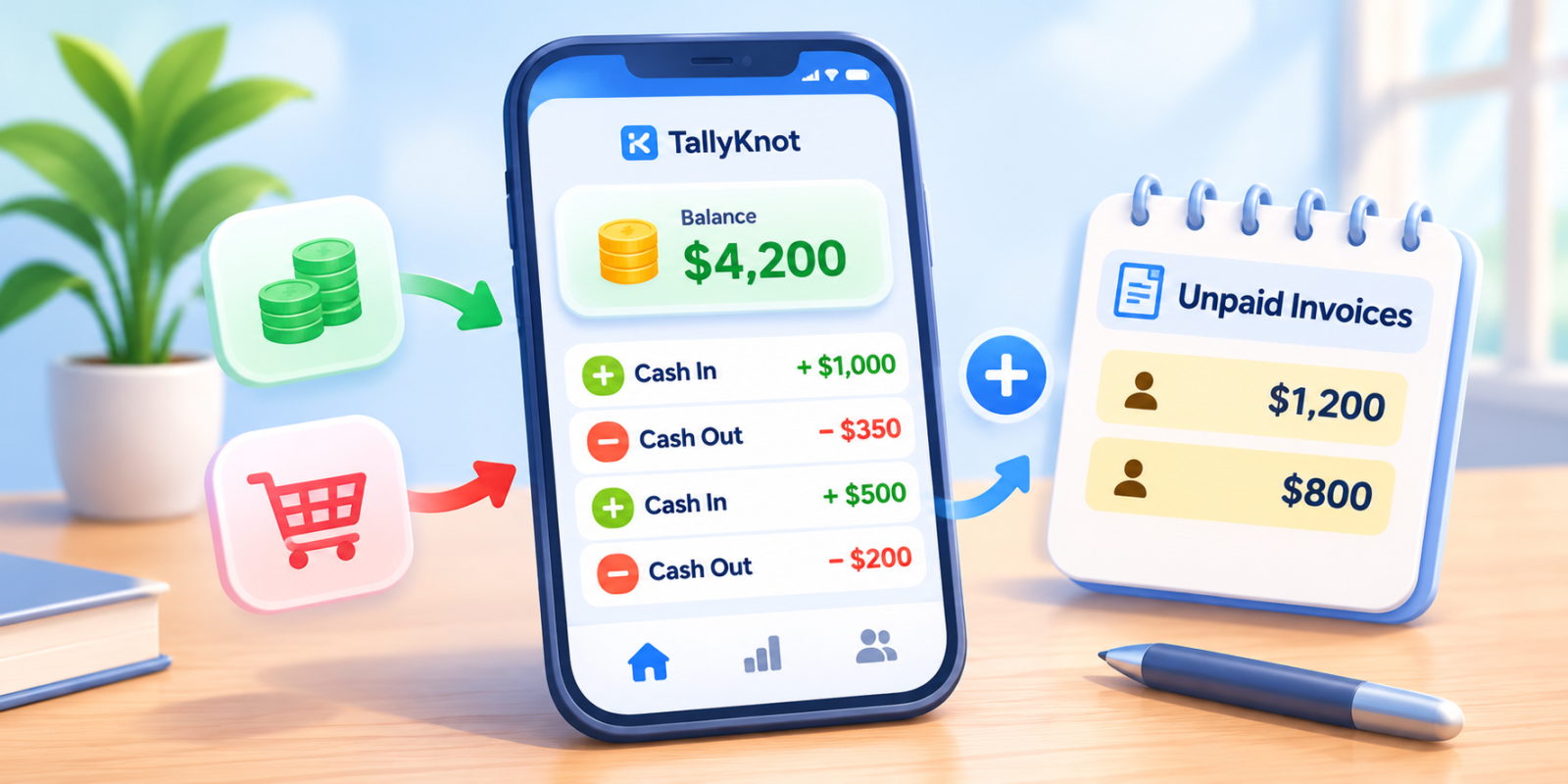
- Keep a list of who owes you. Unpaid invoices are profit you haven't collected yet. Check the list every week and follow up on anything overdue.
- Know what's coming up. Rent, wages, loan payments, insurance. Note the big ones for the next few weeks so they don't catch you out.
- Ask for deposits on big jobs. If Priya had asked for 50% upfront, her March would have looked completely different.
- Keep a cash buffer. Even one month of costs set aside gives you room to breathe when a payment runs late.
- Check your profit regularly. Once a month, add up what you earned and what it cost you. If the margin is shrinking, you'll want to know early.
If you want to check your numbers quickly, our free profit margin calculator shows how much you keep from each sale, and the break-even calculator tells you how much you need to sell before you start making money at all.
How a cashbook helps you see your cash flow
A cashbook is about the simplest cash flow tool there is. Every time money comes in, you record it. Every time it goes out, you record that too. The running balance shows the cash you actually have, not the cash you're expecting.
That's exactly how TallyKnot works. You add Cash In and Cash Out entries to a ledger, and you can see your balance at any time on your phone or on the web. You can also keep separate ledgers for your business and your household, so one doesn't hide problems in the other.
One honest note: a cashbook shows your cash flow, not your full profit. Money you're owed and bills you haven't paid yet won't show up until the cash actually moves. That's why it's worth keeping that short list of unpaid invoices alongside it. Put the two together, and you've got a pretty clear picture of both.
The short version
Profit tells you if your business is working. Cash flow tells you if it can keep going. A business with profit but no cash can fail next week. A business with cash but no profit will fail eventually.
Watch both. Record your cash every day, check your profit every month, and chase your unpaid invoices every week. It isn't glamorous, but it's what keeps small businesses alive.
Frequently asked questions
A few questions people often ask about cash flow and profit.
Q1. Can a business be profitable and still go bankrupt?
Yes, and it happens more often than you'd think. If customers pay slowly and costs have to be paid upfront, a business can run out of cash even while every job makes a profit. Without cash, it can't pay its staff, suppliers or rent.
Q2. Is cash flow the same as revenue?
No. Revenue is the total value of what you sold, whether or not you've been paid yet. Cash flow only counts money that has actually come in, minus money that has actually gone out.
Q3. Can I have positive cash flow and still lose money?
Yes. Loans, customer deposits, unpaid bills or putting in your own savings can all boost your cash for a while, even if the business spends more than it earns. It feels fine until that extra cash runs out.
Q4. How often should I check my cash flow?
For a small business, at least once a week. If money is tight, check it every day. Profit can be checked less often, usually once a month.
Q5. Is a cashbook the same as a cash flow statement?
Not exactly, but they're close cousins. A cash flow statement is a formal report your accountant might prepare. A cashbook is the day-to-day record of money in and out that a cash flow statement is built from. For most small businesses and households, a well-kept cashbook already tells you most of what you need to know.